

1•1•1 Signals: Why Your iPhone Update Is Gaslighting You + Real Fixes
Field notes from a cross-industry builder. Helping individuals to adapt, unlock innovation mindset, and lower technostress.

Hello!
Today’s issue is about cognitive infrastructure.
Fuel it
Understand it
Stress-test it
Signal 1 • Pitaya
Mental Infrastructure: Tips for better human performance. When your body runs well, your mind thinks sharper. Build habits that strengthen both performance and decision-making.
Brain Food
If your 3pm brain feels like it logged off without telling you, you might need this.
I have the attention span of a hummingbird on espresso when it comes to trendy superfoods. When they all get hyped for the same (great) things, antioxidants, flavonoids, anti-inflammatory properties - they start to blur together.
But pitaya, also known as dragon fruit, keeps showing up in my research on cognitive performance. And when the science aligns with something my kiddo will actually eat, I pay attention.
Here is what makes pitaya different from the typical superfood hype cycle.
The fruit is loaded with antioxidants like flavonoids and betalains that act as neuroprotective agents. Translation: they shield your brain from oxidative stress, the kind that accelerates cognitive decline and makes you forget why you walked into a room. Studies show these compounds may improve memory, reaction time, and mental performance.
The B vitamins in pitaya, especially niacin, support neurotransmitter synthesis. That means clearer focus and sharper thinking. The iron content helps your brain tissue get the oxygen it needs. And the vitamin C boosts immune function while stimulating collagen production, which is a bonus if you are also trying to look like you slept.
But here is the part that matters for work performance: pitaya helps regulate blood sugar and supports gut health through its prebiotic fiber. A balanced gut microbiome is not just about digestion. It influences immune function, reduces systemic inflammation, and regulates metabolic processes. Recent research links gut health directly to mental health and cognitive function.
Speaking of immune defense, if you missed my immune moat system for cold season, it’s worth a look → Shield article
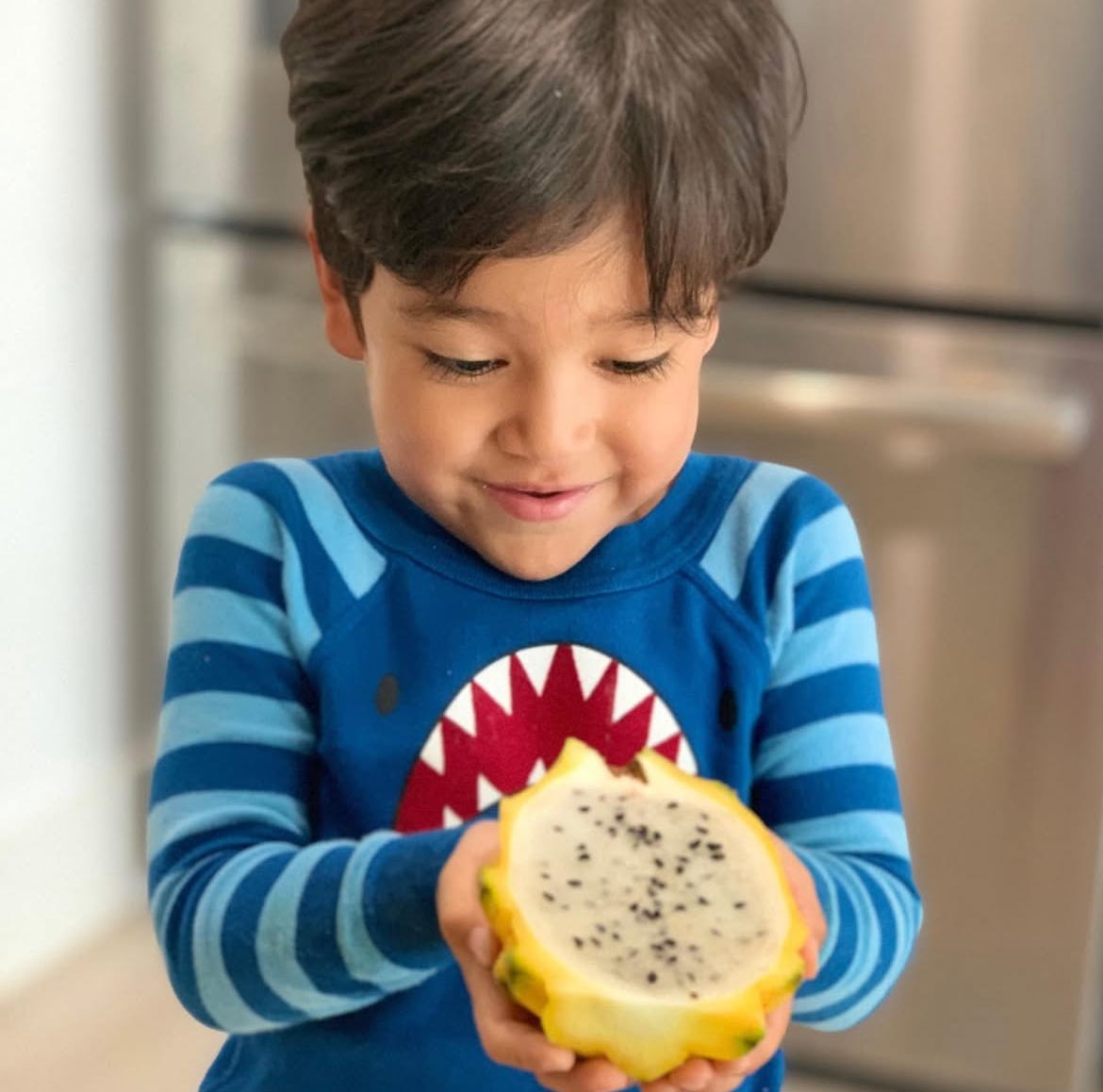
So when you eat pitaya, you are not just getting antioxidants. You are feeding the system that determines how well your brain performs under stress.
I started adding it to smoothies. My son eats it straight, seeds and all. It tastes like a cross between kiwi and pear, mildly sweet with just enough texture to feel interesting.
The yellow variety packs the biggest nutritional punch. The red one looks gorgeous and works for anyone managing digestive issues since it is FODMAP friendly.
Is it magic? No. It’s never magic!
But when you swap that bag of crunchy, engineered snack for pitaya, something shifts. Better focus. Steadier energy. Clearer thinking when the afternoon slump hits. Small move. Big compound.
And unlike most things marketed as brain food, this one actually tastes good.
I know what you’re thinking. Fruit? Really?
If the idea of eating dragon fruit makes you roll your eyes because “health food” tastes like cardboard with good intentions, I get it.
Which is why I put together three recipes that have nothing to do with virtue signaling and everything to do with flavor. Sweet meets savory. Heat meets citrus. Zero eye rolls required.
→ These aren’t your average recipes, try the Dragon Fruit Shrimp that wowed my clients. Hint… Dragon Fruit Salsa with Tajín is one.
What is one food you have added to your routine that genuinely shifted your performance?
Signal 2 • Brain Manual
Minds on a Mission: Showcasing inspiring startups, smart inventions, and bold ideas I follow closely, that add optimism, possibility, and momentum to the way we see the future.
What if your brain came with a user manual?
I have the patience of a terrible-two toddler when it comes to new apps. If something does not deliver immediately, it is gone. I also have a track record of spotting what matters a decade before it hits mainstream. So when I say Autonomic is worth watching, I am not being polite. I am calling the future.
Here is why.
Most of us spend more time optimizing our email inbox than understanding how our brain actually works. We know our HRV. We track our steps. We obsess over sleep scores. But the organ running the whole show? We wing it.
Jamie Wood thought that was absurd.
Jamie burned out in finance in her late 20s. That breakdown became her breakthrough. She spent years after that coaching executives and high performers, teaching them what she wished she had known: how to understand their brains under pressure instead of just pushing through it. In 2021, she founded Autonomic to scale what she had been doing one-on-one into a platform anyone could use.
What makes Autonomic different is this: it is not another meditation app or productivity hack. It is neuroscience translated into behavior change you can actually use. Personalized habit training built on how your specific brain responds to stress, focus demands, and decision fatigue.
The platform asks you to pick a goal. Increase focus. Reduce stress. Sleep better. Then it builds a custom program based on your lifestyle, not a generic template. Real neuroscience-trained coaches adapt your training as you go. Daily check-ins via SMS keep you accountable without becoming another thing you ignore.
What I find compelling is this: Autonomic does not treat your brain like a machine to optimize. It treats it like a system to understand.
The future of performance is not about grinding harder. It is about understanding the why behind what works and building habits that compound quietly over time.
Companies are starting to notice. Universities. Leadership programs. High-growth teams who realize that cognitive performance is not a luxury. It is infrastructure.
I am excited to watch neuroscience moving from research labs into daily practice. Autonomic is not the only company doing this, but it is one of the few doing it right.
The question Jamie asks is simple but radical: What would change if you understood your brain as well as you understand your calendar?
That feels like a future worth building toward.
Signal 3 • Gaslighting
An Invitation to Build: Tools and perspectives to stay resilient as the pace of change accelerates.
Apple user? Congrats, you’re living in a blurry, vibrating nightmare.
Android user? Pour yourself a drink and enjoy the show.
I feel like my tools are gaslighting me. And the cost isn’t just battery life. It’s fluency.
I love Apple. I have since my first Macintosh (yes and SE). Which is why iOS 26 and macOS Tahoe hit differently. Not because they are broken, but because they reveal something deeper about how we lose fluency without even noticing.
I clicked “Update Now” on my iPhone like the responsible adult Apple trained me to be. My laptop? It decided to be even more responsible and auto-updated overnight while I slept. I woke up to two days of mayhem.
Face ID takes three tries now. Battery dies in 60 minutes. Keyboard lag so bad it forgot my Spanglish. Years of training my autocorrect… gone in one update.
And the storage? iOS 26 demands 20 GB. macOS Tahoe takes 60. System Data balloons to 300 GB like it’s hosting a rave I wasn’t invited to. My 60,000 photos of my food, kid & pet I carefully took from every angle? Apple politely suggests I delete them. Or pay for more iCloud.
Day two of the chaos, mid-consult, my laptop froze. Not buffering. Full paralysis. My client laughed: “Oh thank god, I thought it was just me.”
This woman runs a company! She had spent the week wondering if she broke her own laptop.
That moment clarified something: technostress does not announce itself. It compounds quietly until competent people doubt their own competence.
Apple built my muscle memory. Then one update made every gesture feel foreign. That is not a bug. That is what happens when design priorities shift and users absorb the friction as personal failure.
The issue is not Apple. The issue is that we have normalized fluency as proof of our value.
Now we are facing a tech era where tools demand constant re-learning while pretending fluency is our responsibility, and the cost of falling behind feels like losing relevance.
Here is what matters: when fluency drops, resilience becomes the only moat that matters. Teams that stay curious and adapt when their tools betray them or AI advances faster than they can learn it, that maintain innovative thinking under technostress, that recognize the difference between their capability and their environment, those teams win.
The question is not whether your tools will fail you or change. They will.
The question is whether you have built the capacity to keep building anyway when the tools shift mid-project.
This is the core of my CLICK framework for navigating technostress. If your team is facing this, let’s talk.
Feeling this? You’re not alone.
Leave me a comment on my substack or reply and tell me your worst iOS 26 moment. I’m collecting war stories.
Until next signal!
Or sooner, on → Substack. That’s where my best conversations happen. Someone wrote to me last week about their overnight update disaster. Turned into a 6-email thread. I love this part of the work.
Yrmis.
More Signals You Might Have Missed
→ My favorite one so far:
1•1•1 Signals: Hold Your Breath • West Palm Knows • Selling, Reframed
→ The most popular so far:
1•1•1 Signals: Play • Fusion • Adaptation